
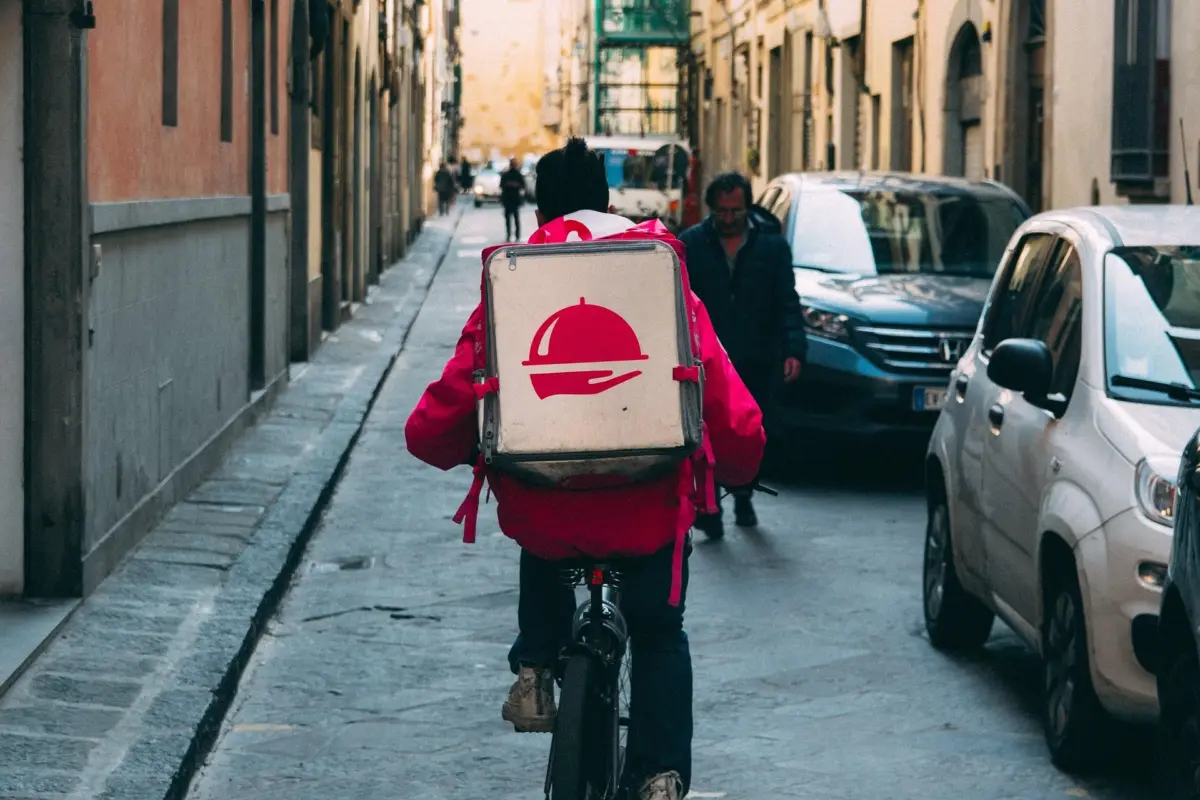
Ask most people who’s more likely to order dinner instead of cooking it, and they’ll probably guess wrong. The assumption is that eating out is a luxury — something you do when you have money to burn. The data says almost the opposite. The real divide isn’t about who can afford to cook. It’s about who can afford the time.
The Numbers Nobody Expects
Households earning under $10,000 a year use food delivery apps at more than double the rate of households earning $150,000 to $175,000. Delivery usage in general skews younger and poorer, not richer — one analysis found that the heaviest delivery spenders in America are millennials making under $50,000, ordering nearly 20 times a year and spending hundreds of dollars in the process. Meanwhile, grocery delivery — the kind of service that helps you cook at home rather than avoid it — actually skews toward higher earners, who are roughly twice as likely to use it as lower-income households.
Put plainly: wealthier people are more likely to have groceries brought to them so they can cook. Lower-income people are more likely to have the finished meal brought to them instead. That’s the opposite of the stereotype, and it’s not because poorer households enjoy takeout more. It’s because they have less control over their own schedules.
Time Is the Actual Currency
Cooking a meal from scratch has a hidden cost that never shows up on a receipt: an hour or more of uninterrupted time, plus the mental bandwidth to plan, shop, and clean up afterward. For someone working a single, predictable, well-compensated job, that hour is annoying but absorbable. For someone stitching together two or three shifts with unpredictable scheduling, a long commute, and no control over when they’ll be home, that same hour is the resource they have the least of.
This is why delivery has quietly become a working-class expense as much as an indulgent one. It’s not that low-income households value convenience more. It’s that time poverty is a real, measurable form of poverty, and it hits exactly the people who can least afford to spend $649 a year solving it. Ordering delivery when you’re exhausted and out of options isn’t a luxury purchase — it’s closer to a tax you pay for not having enough hours in your day.
Cooking Has Quietly Become a Status Symbol
On the other end, something almost inverted has happened among people with more financial and time flexibility: cooking has turned into a lifestyle marker. The rise of home cooking content on TikTok and YouTube, the boom in $14 heirloom-tomato farmers-market hauls, the growing presence of induction ranges and eight-burner stoves as design flexes in home renovation — cooking well, and being seen cooking well, has become a way of signaling that you have both the money for good ingredients and, more importantly, the time to use them.
It’s worth noting that home cooking overall hasn’t disappeared — by some measures it’s actually held steady or ticked up in recent years, partly for economic reasons, since a home-cooked meal can cost a fraction of a restaurant meal per serving. But averages hide the split underneath them. The people driving that “cooking renaissance” skew toward those with more schedule control, not less — the same demographic that’s more likely to have groceries delivered rather than dinner.
The Old Class Marker Was Money. The New One Is a Calendar.
For most of the 20th century, the class marker around food was straightforward: rich people ate out, poor people cooked at home out of necessity. That divide has essentially reversed. Now the marker isn’t your income bracket so much as your relationship to your own schedule. Salaried professionals with predictable hours can treat cooking as a creative outlet and a way to unwind. Hourly workers with fluctuating shifts are more likely to treat a delivery app as the only realistic way to get dinner on the table at all.
It’s a genuinely quiet divide, because it doesn’t look like inequality from the outside. Nobody’s being denied a stove. But one group is choosing to cook because they have the time to enjoy it, and another is priced out of cooking not by the cost of groceries, but by the cost of the hour it takes to use them.