
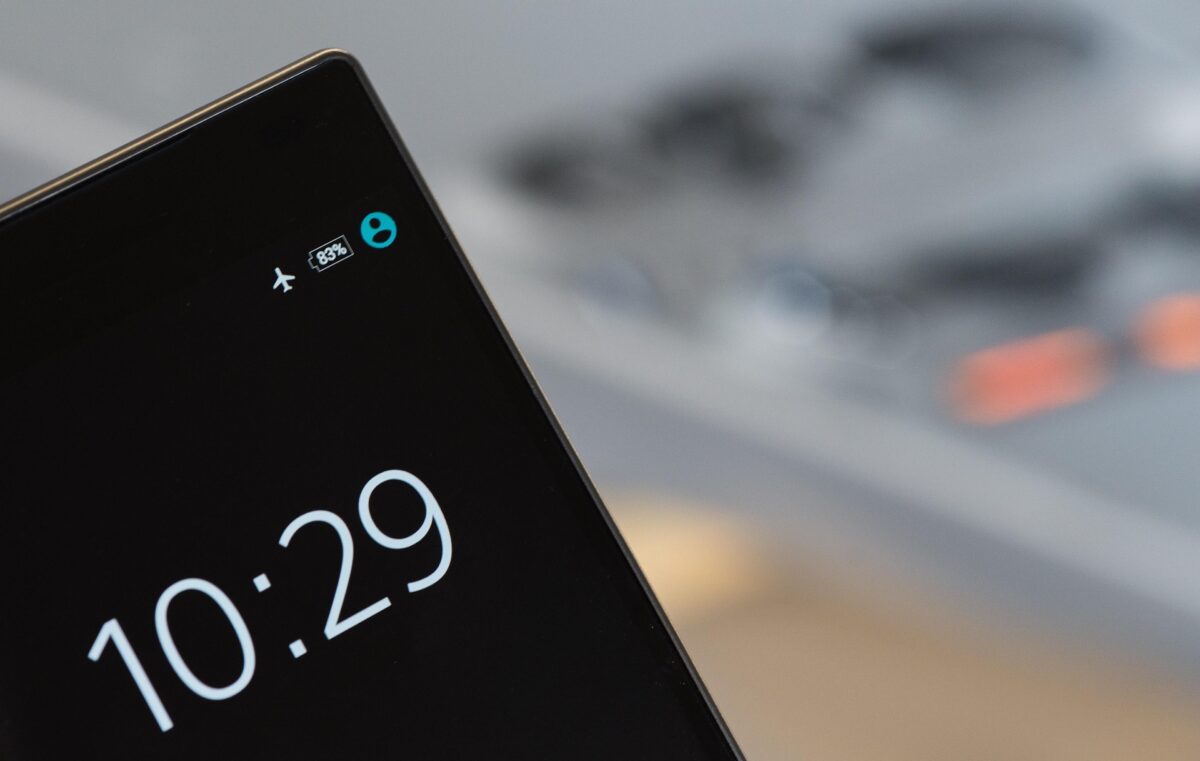
Somewhere along the way, “put your phone on airplane mode before bed” became one of those pieces of advice everyone repeats but few people can explain. Is it actually doing something to your sleep, or is it a wellness ritual that works mostly because you believe it works?
The honest answer is: it’s a mix of both — but not in equal parts. Some of what airplane mode does has solid evidence behind it. Some of the reasoning people give for why it works doesn’t hold up at all. Separating those two is the whole point of this article.
The part that’s real: it removes the thing that actually disrupts sleep
The strongest, most consistent finding in sleep research isn’t about radiation — it’s about interruption. Multiple studies point to the same mechanism: notifications, sounds, and vibrations during the night physically wake people up or pull them out of deeper sleep stages.
A large systematic review of digital media and sleep in adolescents and young adults found that nighttime mobile phone use and awakenings from notifications were consistently linked to worse sleep quality across multiple studies. A separate analysis using the Adolescent Brain Cognitive Development dataset went further, finding that mobile phone–related nighttime awakenings more than tripled the odds of developing problems falling asleep, and increased the odds of restless sleep more than fivefold a year later. The same paper notes that teens in particular tend to be hypervigilant to phone sounds, waking at a notification the way a parent wakes at a child’s cry.
A 2024 meta-analysis in the Journal of Medical Internet Research, pooling data across smartphones, gaming, and social media, similarly found that electronic media use was significantly linked to decreased sleep quality and increased sleep problems overall, with the effect getting stronger as use became more compulsive rather than incidental.
Crucially, this has been tested experimentally, not just observed. In a randomized pilot trial, researchers had one group restrict phone use for 30 minutes before bed for four weeks, while a control group used their phones as usual. The restriction group saw measurably shorter time to fall asleep, longer total sleep duration, better sleep quality scores, and lower pre-sleep mental arousal compared to the control group.
Airplane mode plugs directly into this mechanism. It silences every incoming call, text, and app notification at the source — which is a more reliable version of “put it on silent,” since silent mode can still let some alerts through depending on settings, and doesn’t stop the phone from lighting up on your nightstand. If interruption is what’s disrupting your sleep, removing the interruption should help. That part isn’t placebo — it’s the expected result of a well-established mechanism.
The part that’s shakier: the “radiation” story
Here’s where a lot of the airplane-mode advice quietly goes off the rails. A common version of the claim is that phones emit radiofrequency electromagnetic fields (RF-EMF) that disturb your brain and body overnight, and that airplane mode protects you from this by cutting off the signal. This is the part worth being skeptical about.
The actual research on RF-EMF and sleep does not support that claim. A large prospective cohort study specifically designed to test this found no evidence that environmental RF-EMF exposure affected self-reported or objectively measured sleep quality, even though sleep disturbance is the most commonly self-reported symptom people attribute to EMF exposure. The long-running COSMOS cohort study, one of the most rigorous efforts to track mobile phone use and long-term health outcomes, reached the same conclusion: researchers found no support for the idea that RF-EMF from mobile phone use affects sleep quality over time, and noted that a minor association with insomnia in heavy phone users was better explained by other factors related to phone use — not radiation itself.
This lines up with the broader scientific position on cell phone radiation generally. As of recent reviews, the National Cancer Institute has stated that the evidence to date suggests cell phone use does not cause the health effects popularly attributed to it, and regulatory safety limits are set with a wide margin below any observed biological effect. It’s worth noting this isn’t a completely settled debate — a small number of researchers and advocacy groups argue the existing safety reviews have methodological gaps and that caution is still warranted, particularly for people who self-report electromagnetic hypersensitivity. But that’s a minority position, and even the studies raising concerns generally stop short of claiming solid evidence that phone radiation disrupts sleep specifically.
So if someone tells you airplane mode helps because it “blocks the radiation that keeps your brain from resting,” that part is closer to folk belief than established science. It may still feel true to them — but that feeling is likely doing the work of the notifications you’re no longer getting, or the phone you’re no longer picking up, not the radio signal you’ve switched off.
Why it can still feel like more than a placebo
None of this means the benefit is imaginary. A few real effects overlap with the ritual of switching to airplane mode, even setting the radiation myth aside:
It removes temptation, not just notifications. A phone in airplane mode is a phone you’re less likely to pick up “just to check.” Since bedtime phone use itself — scrolling, texting, watching something exciting — has been linked to physical and psychological hyperarousal that delays sleep onset, removing the easy on-ramp to that behavior matters independently of any notification.
It’s a consistent behavioral cue. Turning on airplane mode is a small ritual that signals “the day is over” — similar in function to dimming lights or brushing your teeth. Behavioral sleep researchers generally agree that consistent pre-sleep cues help condition the brain to wind down, which is part of why structured routines outperform inconsistent ones even when the individual actions are minor.
Expectation itself can shift subjective sleep quality. This is the one place a placebo-like effect probably is doing real work. If you believe a habit is helping your sleep, you may report feeling more rested even when objective measures move less than the subjective ones do. That doesn’t make the practice worthless — subjective sleep quality affects daytime mood and functioning — but it does mean some of the reported benefit is about belief, not mechanism.
The verdict
Airplane mode at night is not a placebo, but it’s also not doing what a lot of people think it’s doing. Strip away the radiation mythology and you’re left with something simpler and better supported: it’s an effective, low-effort way to eliminate the sounds, vibrations, and temptations that reliably disrupt sleep. The mechanism is behavioral and acoustic, not electromagnetic — but the outcome, based on both observational and experimental research, is genuinely better sleep for most people who currently sleep with notifications on.
If you want the same benefit without giving up your phone as an alarm clock, the evidence points to a simpler takeaway: it’s not the airplane symbol that matters, it’s the silence. Do Not Disturb with all notifications off will get you most of the same result — the “airplane mode” part is really just a shortcut for making sure nothing slips through.
If you already did the notification audit from turning off daytime noise, extending it to a bedtime cutoff is a five-second addition, not a new habit.